Pelvic Health Education
Is Pelvic Floor Therapy Worth It?
Is Pelvic Floor Therapy Worth It?
An Honest Answer from a Specialist
If you've been living with pelvic pain, leaking, pressure, or discomfort and wondering whether pelvic floor therapy is actually worth trying — this post is for you.
The short answer is: yes, for most people, and often dramatically so. But it depends on what you're dealing with, who you're working with, and whether the approach matches what your body actually needs.
Overview
What Is Pelvic Floor Therapy, Actually?
Pelvic floor therapy is a specialized form of physical therapy focused on the muscles, fascia, and nerves of the pelvic floor — the group of muscles that span the base of the pelvis and support your bladder, uterus, and bowel.
A lot of people assume pelvic floor PT is just Kegel exercises. It isn't. In the hands of a skilled, specialized therapist, it's a comprehensive evaluation and treatment approach that can include hands-on manual therapy, internal and external soft tissue work, myofascial release, nervous system regulation, and movement retraining.
And critically: it works on the actual source of your symptoms — not just the surface level.
Conditions Treated
- Chronic Pelvic PainIncluding pain that hasn't responded to medication or surgery. Hands-on manual therapy directly addresses the tension, trigger points, and fascial restrictions driving it.
- Urinary Leaking & IncontinenceBoth stress and urge incontinence. Research consistently shows pelvic floor PT outperforms medication with no side effects.
- Postpartum RecoveryAfter vaginal delivery or C-section — leaking, scar tissue, diastasis recti, prolapse symptoms, and pain with intercourse.
- Pain with IntercourseOften caused by pelvic floor muscle tension and myofascial restrictions that respond well to skilled manual therapy.
- Pregnancy-Related Pelvic PainSI joint pain, pubic symphysis pain, pelvic girdle pain — all treatable and not something you have to push through.
- Endometriosis-Related PainEspecially after surgery, when the musculoskeletal patterns the body developed around the endo need direct treatment.
- Tailbone Pain & Painful SittingAlmost always connected to pelvic floor muscle tension and directly treatable.
Honest Answer
When Pelvic Floor Therapy Doesn't Work — And Why
This is worth being honest about, because not all pelvic floor therapy is the same.
A lot of patients have already tried pelvic floor PT and didn't get much from it. In many cases, the reason isn't that pelvic floor therapy can't help — it's that the approach wasn't right for what their body needed.
The most common mismatch: a therapist focusing on Kegel exercises and strengthening when the patient actually has a hypertonic (chronically tight) pelvic floor. For patients whose muscles are already overactive and unable to relax, strengthening makes things worse, not better. Effective treatment requires the opposite — releasing, lengthening, and down-regulating.
If your previous experience checked any of these boxes, it doesn't mean therapy can't help you — it means you haven't found the right approach yet.
Common Gaps
- Short sessions that don't allow time for thorough hands-on treatment
- Evaluations that only look at the pelvic floor in isolation, rather than the whole body
- Protocols built for the average patient, not for you specifically
- No internal assessment, which means important contributors to pain or dysfunction are missed entirely
Not sure if your previous experience was the right fit?
Book a Free Consultation
Book a free 10-minute consultation with Dr. Ali Brown. No commitment — just an honest conversation about your symptoms and whether a different approach could help.
What to Look For
What Good Pelvic Floor Therapy Actually Looks Like
High-quality pelvic floor PT is thorough, individualized, and hands-on. Here's what to expect — and look for at every visit:
01
A Real Evaluation
Your first session should include a detailed history, a full assessment of your posture, movement, breathing, hips, and spine, and — if appropriate and with your clear consent — an internal pelvic floor assessment. Without this, a therapist is guessing about what to treat.
02
Time
Pelvic floor dysfunction is complex. Effective manual therapy can't be done in 30-minute slots between two other patients. You should have full, uninterrupted time with your therapist — ideally a full hour — at every visit.
03
Hands-On Treatment
Exercises and home programs have their place, but they are not a substitute for skilled manual therapy. Myofascial release, internal soft tissue work, and trigger point treatment are what change things for most patients with chronic symptoms.
04
Whole-Body Thinking
The pelvic floor is connected to your core, hips, spine, diaphragm, and nervous system. A therapist who only looks at the pelvis will miss significant contributors to your symptoms.
05
Clear Communication & Consent
Everything should be explained before it happens. Internal work should never be assumed. You should always feel in control of your session — at every visit, without exception.
Timeline
How Long Does It Take to See Results?
This varies — but most patients notice something meaningful within 3 to 6 sessions. That might be a reduction in pain levels, improved bladder control, less urgency, or simply feeling more at ease in your body.
For more complex or long-standing conditions, the process takes longer and involves more layers of treatment. What matters most is finding the right approach — then staying consistent with it.
What Makes the Difference
1
Start sooner rather than later
Symptoms that have been present for years are harder to resolve than those that are more recent. The earlier you begin, the faster and more complete your recovery tends to be.
2
Stay consistent
Attending sessions regularly and following through with any home recommendations compounds your progress between visits.
3
Work with a specialist
Working with a therapist who specializes in pelvic floor dysfunction — not one who treats it occasionally alongside other conditions — makes a significant difference in outcomes.
Adapt Wellness · Charlotte, NC
What to Expect at Adapt Wellness
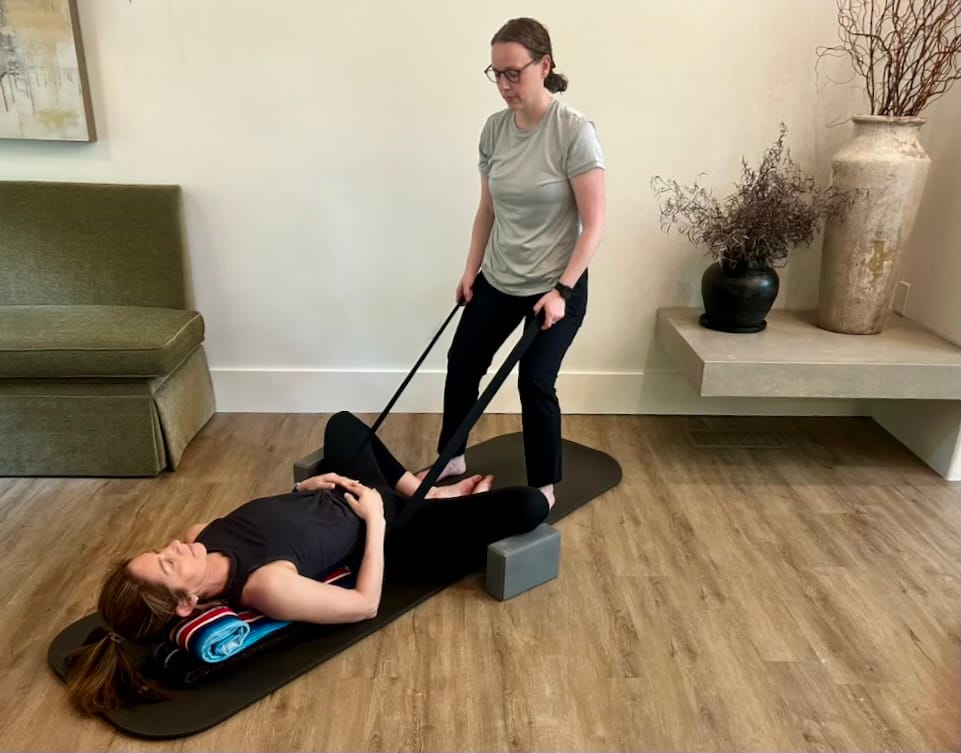
At Adapt Wellness, every session is one-on-one with Dr. Ali Brown — a licensed physical therapist with over 15 years of clinical experience specializing in pelvic floor dysfunction. There are no aides, no double-bookings, and no 30-minute time slots.
Your first visit includes a thorough evaluation of your full history, movement patterns, and pelvic floor function. Internal assessment is always optional and only performed with your explicit, informed consent. From there, your treatment plan is tailored to what you specifically need — not a generic protocol.
We treat pelvic pain, incontinence, postpartum recovery, pain with intercourse, pregnancy-related pain, and complex conditions like endometriosis, vulvodynia, and hypertonic pelvic floor dysfunction. Our approach combines myofascial release, manual therapy, nervous system regulation, and Medical Therapeutic Yoga for a whole-body perspective.
Private in-home sessions are also available throughout the Charlotte area.
True One-on-One Care
Full hour with Dr. Ali Brown at every visit. No aides, no shared sessions, no compromises.
Thorough Evaluations
We take time to understand your full history and goals before any treatment begins.
Trauma-Informed & Consent-Based
Every technique explained before it's performed. Internal work is always your choice.
In-Home Sessions Available
Private pelvic floor therapy in your home throughout the Charlotte area.
FAQ
Frequently Asked Questions
Answers to what patients ask most before booking their first session.
-
Most patients begin to notice meaningful improvement within 3 to 6 sessions, depending on the condition and consistency with therapy. More complex or long-standing issues may take longer — but progress is typically felt early, even if full resolution takes more time.
-
Anyone experiencing pelvic pain, urinary leakage, postpartum recovery issues, pain with intercourse, tailbone pain, or core instability can benefit from pelvic floor therapy. You don't need a referral or a formal diagnosis — if symptoms are affecting your daily life, an evaluation is a worthwhile first step.
-
No. Treatment is gentle and always tailored to your comfort level. Most patients find sessions relieving rather than painful — similar to the feeling after a deep tissue massage. Some tenderness can occur during manual release work, but your therapist will always adjust based on your feedback in real time.
Explore More
Other Services at Adapt Wellness
Every condition we treat is connected. Browse the services that may be relevant to what you're experiencing.
Specialty
Pelvic Pain Treatment
Chronic pelvic pain, vulvodynia, tailbone pain, endometriosis-related pain, and painful sitting — treated with hands-on myofascial release and manual therapy.
Learn more
Core Service
Pelvic Floor Therapy
Comprehensive one-on-one pelvic floor evaluation and treatment for incontinence, prolapse, pain with intercourse, and pelvic floor dysfunction.
Learn more
Postpartum
Postpartum Recovery
Rebuilding strength, addressing scar tissue, diastasis recti, and bladder control after vaginal delivery or C-section — at your pace.
Learn more
Prenatal
Pregnancy Pelvic Pain
SI joint pain, pelvic girdle pain, pubic symphysis pain, and urinary leaking during pregnancy — all treatable with gentle hands-on care.
Learn more
Sexual Health
Pain with Intercourse
Consent-based, trauma-informed treatment for dyspareunia and vaginismus using myofascial release and nervous system regulation — always at your pace.
Learn more
Orthopedic
Orthopedic Support
Hip pain, low back pain, SI joint dysfunction, and post-surgical rehab — treated with a whole-body perspective that connects your musculoskeletal and pelvic health.
Learn more
Ready to Find Out If Pelvic Floor Therapy Can Help You?
Book a free consultation with Dr. Ali Brown to talk through your symptoms and get an honest answer about whether pelvic floor therapy at Adapt Wellness is the right next step for you. No pressure, no obligation.
Book Your Free Consultation Call 704-816-9847